
NBMC, Le CAFi share recommendations with Standing Committee on Official Languages


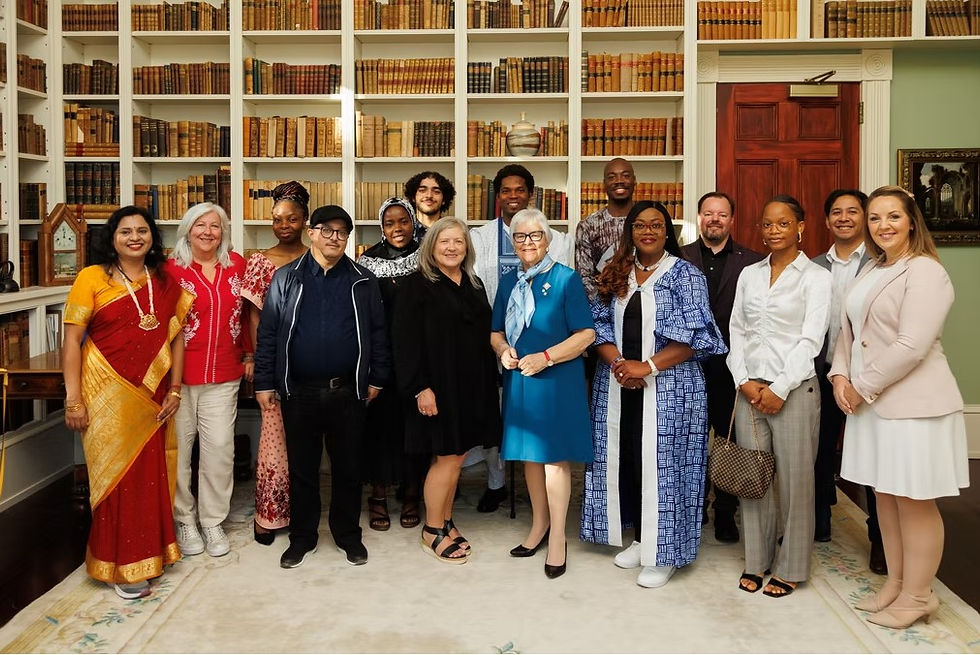
On June 23, 2026, the New Brunswick Multicultural Council (NBMC), along with its member le Centre d'accueil et d'accompagnement francophone des immigrants du Sud-Est du Nouveau-Brunswick (le CAFi), presented to the Standing Committee on Official Languages. The Committee’s consultation on the Official Languages Act represents an important opportunity to reaffirm the province’s commitment to the vitality of its official language communities.
“Language barriers do not exist in isolation; they are one layer in a much more complex integration experience,” said Ben McNamara, Executive Director of NBMC. “A newcomer arriving in New Brunswick may be navigating multiple realities at once: they may be part of a Francophone community, they may be newly arrived with limited familiarity with Canadian systems, and they may also be racialized in a province that is still building its capacity to receive diverse populations. These are not separate challenges that can be addressed one at a time; they compound one another.”
“Beyond access to services, what retains Francophone newcomers is the presence of a French-speaking living environment—schools for their children, community organizations, media, and cultural spaces.” Said Angèle Losier, Executive Director of Le CAFi. “The Official Languages Act supports the existence of these institutions. Strengthening is therefore not simply a matter of linguistic rights; it is a direct condition for retention and long-term settlement.”
NBMC and Le CAFi presented four recommendations to the Committee:
The revised Official Languages Act explicitly recognizes the link between immigration and linguistic vitality;
The Act strengthens the obligation to provide services in French consistently across all regions, with particular attention to health care, employment services, and emergency services;
The committee considers integrating what would be called an arrival-to-language pathway into the Act’s framework. This would formally recognize that some newcomers arrive in New Brunswick with no proficiency in either official language, and that supporting their progression toward one or both languages is not only a settlement imperative but also a linguistic vitality imperative;
The revised Act requires the measurement of outcomes, not only inputs.
Media Contact:
NBMC – media@nbmc-cmnb.ca
Le CAFi – angele.losier@cafi-nb.org

Comments